How to Create an Immersive Brand Experience That Leaves a Lasting Impression
In summary
An immersive brand experience is a physical or digital installation that immerses an audience in a brand’s world to create a memorable emotional connection. Frénésie, a brand experience agency based in Paris (75002), designs these experiences for brands such as Perrier, Hendrick’s, and Adidas, with an average budget of around €150,000. Success depends on a strong concept, a sensory experience, and expert execution.
What is an immersive brand experience?
An immersive brand experience is an initiative—whether physical or digital—that places an audience at the heart of a brand’s universe to evoke lasting emotion and active engagement. Unlike an advertisement that one simply watches, an immersive experience is lived: the visitor touches, listens, tastes, or interacts. Frénésie, a brand experience agency located at 6 rue d’Alexandrie in Paris (75002), bases this approach on what it calls “emotional experiential design.”
The market confirms the shift toward this format. According to PwC (Global Consumer Insights Pulse Survey, 2024), 63% of consumers say that a positive brand experience has a greater influence on their loyalty than a traditional advertising campaign. Immersion is based on three key elements: sensory design, storytelling, and interaction.
Immersive experiences take many forms: brand pop-ups, temporary flagship stores, consumer activations, press events, and influencer campaigns. Frénésie connects brands with their audiences and with contemporary culture through these initiatives. In Paris, these experiences take place in unconventional venues, pop-up stores, or event spaces that are temporarily transformed for the duration of a campaign.
The goal isn’t just to attract an audience. It’s about creating a memory associated with the brand—one that lingers after the visit and is often shared on social media. It’s this emotional connection that distinguishes a successful experience from a mere publicity stunt. To learn more about this approach, visit Frénésie’s dedicated page on the immersive brand experience agency in Paris.
What are the steps to creating an immersive experience?
Creating an immersive brand experience involves five steps: strategic planning, creative concept, set design, production, and measurement of results. Frénésie applies this method in Paris to projects ranging from €50,000 to €500,000, covering the entire value chain.
- Strategic Framework: Defining the objective (brand awareness, product launch, engagement), the target audience, and key performance indicators.
- Creative idea: developing a powerful concept that connects the brand to contemporary culture and evokes emotion.
- Exhibition design and layout: translating the concept into a physical space, creating a sensory experience, developing a visual identity, and fostering interactions.
- Production: location scouting in Paris, set construction, logistics, coordination of vendors, and setup.
- Metrics: collection of attendance data, press and social media coverage, and visitor satisfaction.
Preparation time varies depending on the scale of the event. A brand pop-up takes 8 to 12 weeks to prepare, while a large-scale activation can take 4 to 6 months. Frénésie recommends beginning the planning process at least three months before the target date to secure a venue in Paris, where demand for event spaces remains high.
A clear brief speeds up every step. To help you structure your request, Frénésie provides a guide for briefing a brand experience agency. The quality of the brief directly determines the relevance of the concept and how well the budget is managed.
8 to 12 weeks
Average time required to set up a brand pop-up in Paris (data from Frénésie, 2026)
What ingredients make an experience memorable?
An immersive experience leaves a lasting impression when it combines a unique concept, a complete sensory immersion, and active visitor participation. These three elements transform a visit into a memory. Frénésie designs its installations in Paris around this concept of emotional experience.
The first ingredient is the idea. A successful experience is based on a concept that surprises and makes sense for the brand. Consistency with the brand’s identity prevents the experience from feeling like a gimmick. The second ingredient is the sensory dimension: light, sound, scent, textures, and taste create an atmosphere that lingers in the memory. A Nielsen study (2023) shows that campaigns that engage multiple senses generate, on average, 30% more engagement.
The third ingredient is interaction. Visitors who take action, create, or share are more likely to remember the experience. The most effective installations incorporate an “Instagrammable” moment that extends the online experience. Frénésie designs these sharing opportunities to amplify reach beyond in-person visitors.
A unique idea
A concept that is consistent with the brand, one that surprises without compromising its identity.
Sensory Immersion
Up to 30% higher engagement when multiple senses are engaged (Nielsen, 2023).
Active Participation
A visitor who interacts and shares remembers the experience and passes it on.
The quality of execution makes all the difference. A sloppy set design or a confusing layout undermines the desired emotional impact. That’s why Frénésie manages the entire production process, from conception to takedown. Discover the principles of effective brand activation on our Brand Activation in Paris page.
How much does an immersive brand experience in Paris cost?
An immersive brand experience in Paris costs an average of €150,000, with a realistic range of €50,000 to €500,000 depending on the scale and duration. This budget covers strategy, design, production, and logistics. Frénésie works within this scope for mid-sized companies and major brands.
Several factors make up the cost: venue rental in Paris, set design and decor, technology and audiovisual equipment, staffing, logistics, and communications. The venue often accounts for a significant portion of the cost, as event spaces in Paris rent for between €3,000 and €20,000 per day, depending on the size and location.
| Device Type | Estimated Budget | Typical duration |
|---|---|---|
| Press and Influencer Event | €50,000 – €120,000 | 1 evening |
| Brand Pop-Up | €80,000 – €200,000 | 3 days to 4 weeks |
| Consumer activation | €150,000 – €350,000 | 1 to 6 weeks |
| Temporary Flagship | €250,000 – €500,000 | 1 to 3 months |
The budget also depends on the duration of the campaign and the level of technology involved. An augmented reality device or an interactive installation will drive up the cost. For a detailed projection, Frénésie provides an analysis of brand activation budgets in Paris for 2026. Each quote is tailored to the specific objective, rather than based on a standard rate.
What are some examples of successful immersive experiences in Paris?
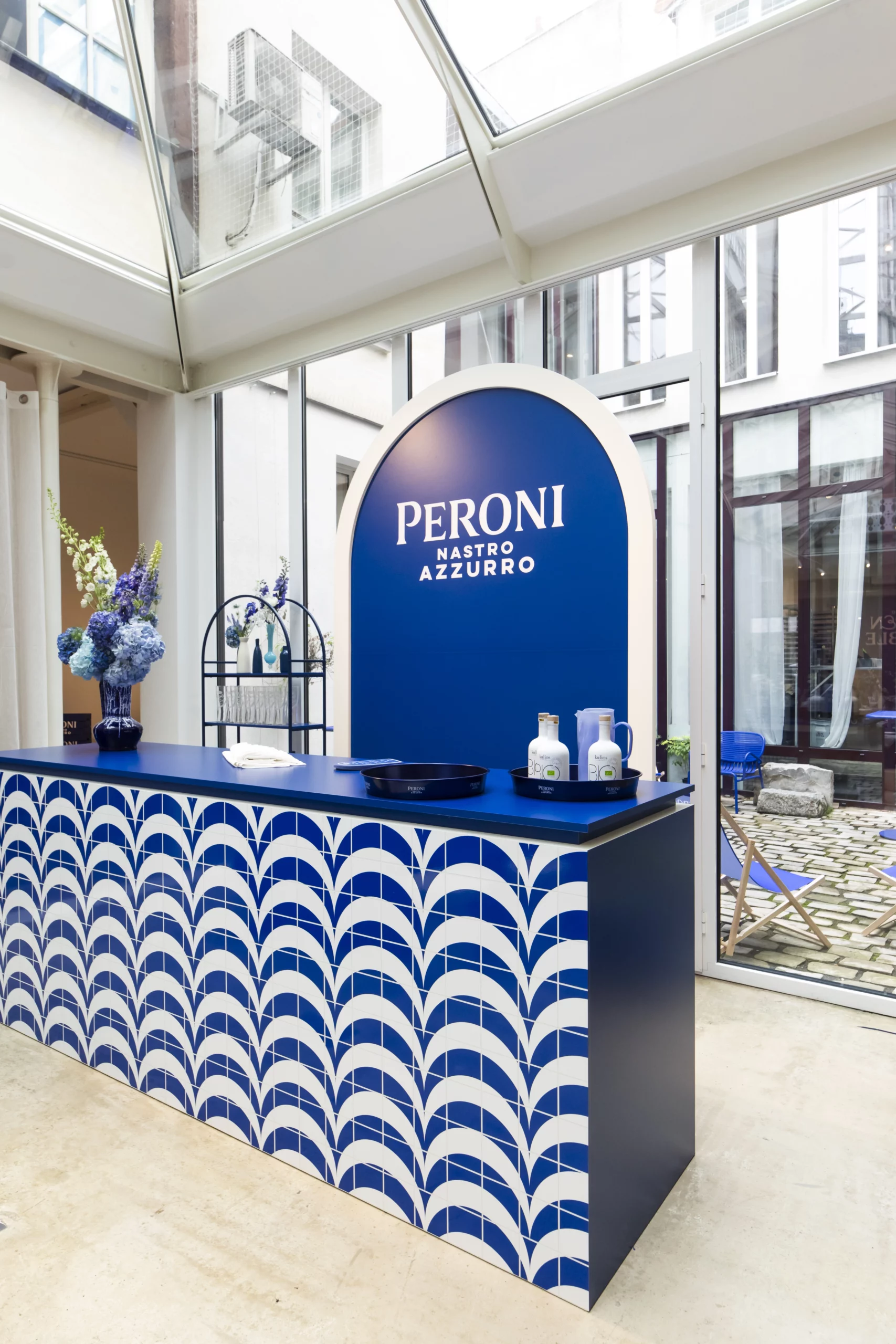
Frénésie has created immersive experiences in Paris for Perrier, Hendrick’s, Swatch, Adidas, and TikTok, each built around a compelling concept and a sensory journey. These projects span the FMCG, luxury, sports, tech, and entertainment sectors.
For Hendrick’s, Frénésie created several immersive experiences, such as The Grand Gin Hotel and the Flower Shop, transforming the gin brand into surreal settings for the public to explore. For Perrier and Maison Perrier, the agency developed sensory experiences centered on freshness and taste. For Swatch, the “Folie Douce” campaign linked the brand to the world of mountains and parties.
In the world of sports and tech, Adidas Home of Sport and the TikTok campaign showcase Frénésie’s ability to create spaces where audiences can play, test, and share. These examples highlight a consistent theme: experiences are meant to be lived and shared. You can browse all of Frénésie’s projects to see the diversity of its initiatives.
Key takeaways
- Frénésie covers seven sectors: FMCG, luxury, tech, retail, sports, fashion, and entertainment.
- Average project budget: approximately €150,000 (ranging from €50,000 to €500,000).
- Verifiable references: Perrier, Hendrick’s, Swatch, Adidas, TikTok, Peroni, 1664.
Should we go through an agency or handle it in-house?
Working with a brand experience agency is the right choice when a project requires a strong creative concept, complex production, and strict adherence to deadlines—all of which an in-house team often struggles to handle on its own. Frénésie serves as an integrated partner in Paris, from strategy through to dismantling.
In-house management may be sufficient for a simple, recurring operation. However, when an event involves custom staging, securing a venue in Paris, and coordinating about ten service providers, working with an agency reduces risks and streamlines the management process. The agency also provides a network of trusted suppliers and production capabilities that in-house teams rarely have access to.
| Criterion | Agency (Frenzy) | Internal Management |
|---|---|---|
| Creativity | Customized Concept, Cultural Monitoring | Limited to internal resources |
| Production | Network of trusted service providers | To be developed on a project-by-project basis |
| Deadline | Well-established process | Depends on the team's workload |
| Coordination Costs | Centralized | Distributed internally |
The decision comes down to ambition and complexity. To help you weigh the two options, Frénésie provides a detailed comparison on its page: “Brand Experience Agency in Paris vs. In-House.” An ambitious project is best handled by an agency, while a simple initiative can be managed in-house.
How can you measure the success of an immersive experience?
The success of an immersive experience is measured using four categories of metrics: attendance, engagement, press coverage, and brand impact. Frénésie defines these metrics from the outset, ensuring that every campaign in Paris can be evaluated.
Traffic includes the number of visitors, time spent on the site, and the return rate. Engagement measures interactions, content created, and shares on social media. Press coverage is evaluated based on the number and quality of mentions in publications such as CBNews, Stratégies, and Konbini. Brand impact is assessed through aided brand awareness and purchase intent, using before-and-after studies.
According to a study by EventTrack (2023), 91% of consumers who have had a positive brand experience are more likely to make a purchase. This figure justifies investing in measurement, which is often overlooked. An immersive experience without tracking tools remains difficult to optimize from one event to the next.
Frénésie recommends combining quantitative and qualitative data. A short on-site questionnaire, combined with social media monitoring, provides an accurate picture. For more information on rolling out a measurable campaign, see the guide to brand activation in Paris. Measurement turns a one-time campaign into a learning experience for future ones.
External sources: PwC Global Consumer Insights Survey and Nielsen Insights.
What our customers say
Frénésie has a rating of 5.0/5 based on one verified review.
“I had the pleasure of working with them on two major projects: the 10th anniversary of the company where I serve as event manager. Everything was handled with great skill and professionalism; they were able to adapt to our last-minute requests and perfectly met our expectations. Kudos to the entire team.”
— Floriane Carret, Event Manager★★★★★ 5/5
Frequently Asked Questions
What is the difference between an immersive experience and a traditional event?
A traditional event brings an audience together around a program, while an immersive experience places the visitor at the heart of a brand’s world—one they explore and experience firsthand. Frénésie designs these experiences in Paris to create a memorable emotional impact—not just a gathering.
How long does it take to create an immersive experience?
Allow 8 to 12 weeks for a brand pop-up and 4 to 6 months for a large-scale activation. Frénésie recommends beginning the planning process at least three months before the target date to secure a venue in Paris.
What kind of budget should you set aside for a brand experience in Paris?
The average budget for a Frénésie project is around €150,000, ranging from €50,000 to €500,000. The cost depends on the location in Paris, the set design, the technology, and the duration of the production.
Does Frénésie work with small businesses?
Frénésie primarily works with mid-sized companies and major brands in both B2C and B2B sectors. Its projects focus on large-scale initiatives rather than small-scale operations.
What industries does Frénésie cover?
Frénésie operates in the FMCG, luxury, tech, retail, sports, fashion, and entertainment sectors. Its clients include Perrier, Hendrick’s, Swatch, Adidas, and TikTok.
Does an immersive experience only work in person?
No, an immersive experience can be physical, digital, or hybrid. Based in Paris, Frénésie designs experiences that often combine a physical space with a digital extension to expand the reach beyond the visitors present.
Written by
Benoit Malphettes
CEO and co-founder of the brand experience agency Frénésie. Based in Paris, he oversees the creation of immersive experiences for brands such as Perrier, Hendrick’s, Swatch, and Adidas, leading projects that span strategy, design, and production.
Summarize this article using AI
Want to create an immersive brand experience in Paris?
Frénésie designs campaigns for brands such as Perrier, Hendrick’s, and Adidas, and has a customer rating of 5.0 out of 5. Let’s talk about your project.
Schedule a free appointment