Should you handle a brand activation in-house or outsource it to an agency? Which is the better choice?
In summary
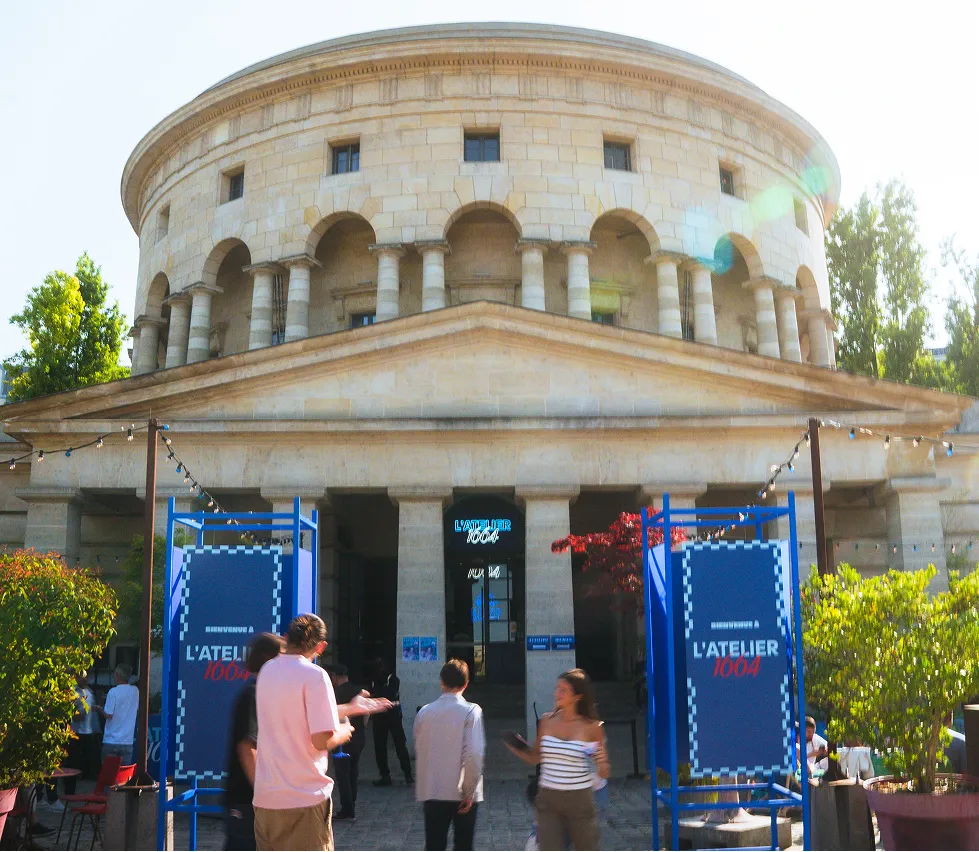
In-house brand activations are best suited for companies that run more than eight events per year and already have a creative and logistics team in place. For a one-time or complex project in Paris, a brand experience agency like Frénésie can provide integrated set design, production, and on-site management without fixed overhead costs. The choice depends primarily on the frequency of activations, the available budget, and access to event service providers.
What is brand activation?
A brand activation is a marketing campaign that provides an audience with a physical or digital experience to create a direct connection with a brand. It can take the form of a pop-up store, an event booth, a product launch, or an immersive installation. The goal is to generate measurable engagement: visits, shared content, collected data, and sales.
The term “brand experience” refers to all of a brand’s experiential touchpoints, of which activation is the most tangible form. In Paris, this market is supported by a dense network of service providers: set designers, stage managers, production agencies, and event venues. Syntec Conseil, a professional organization in the sector, lists several hundred companies active in experiential marketing in the Île-de-France region.
Frénésie, a Paris-based brand experience agency, designs these types of campaigns for brands such as adidas, Perrier, and Hendrick’s. A successful activation rests on three pillars: a creative idea aligned with the brand, seamless logistics and production, and a system for measuring results. These three pillars also determine whether a brand should handle the project in-house or hire an agency. To understand the available formats, the guide to brand activation in Paris details the main approaches.
Should you handle brand activation in-house or outsource it to an agency?
In-house operations are suitable for brands that run more than 8 activations per year with a dedicated team; an agency is better suited for one-off, complex projects, or those requiring a network of service providers in Paris. The break-even point for in-house operations depends on the volume and frequency of the activities.
In-house production provides total control over the brand and immediate responsiveness. It requires hiring hard-to-find professionals: event project managers, set designers, and technical directors. The cost of an in-house team of three people exceeds €180,000 per year in payroll expenses in Paris (Syntec 2025 pay scale), a fixed amount that does not depend on the number of projects.
A brand experience agency like Frénésie pools these skills across multiple clients and provides access to a network of pre-negotiated service providers. Frénésie has managed campaigns in Paris for Swatch, Cointreau, and Warner Bros., using teams assembled on an as-needed basis. This model transforms a fixed cost into a variable cost, activated on a project-by-project basis.
8 activations per year
Indicative threshold beyond which in-house production becomes economically viable for a brand (Frénésie analysis, 2026)
The distinction between a brand experience agency and a traditional event agency also influences the choice. A detailed comparison can be found in the analysis of event agencies versus brand experience agencies.
How much does brand activation cost when done in-house versus through an agency in Paris?
A brand activation campaign in Paris costs between €30,000 and €250,000 depending on its scope, whether it’s handled by an in-house team or an agency, but the cost structure differs significantly. An in-house team focuses its expenses on fixed salaries; an agency bills on a project basis, including fees.
Internally, a brand covers salaries year-round, even when there are no ongoing projects. A team of three people costs approximately €180,000 per year in Paris, plus the production costs for each project. This model becomes profitable if the team is consistently busy.
With a brand experience agency like Frénésie, design and project management fees typically account for 15 to 25 percent of the production budget. In return, the brand pays only when the campaign goes live. Frénésie also negotiates rates with Paris-based service providers thanks to its recurring business volume.
| Criterion | Internalization | Brand Experience Agency |
|---|---|---|
| Cost Structure | Fixed (salaries ~€180,000/year) | Variable (by project) |
| Brand Monitoring | Total | Shared, guided by a brief |
| Network of Service Providers | To be completed | Existing, negotiated |
| Responsiveness | Immediate | Depends on the agency's schedule |
| Profitability | As many as 8 projects per year | Best for up to 8 projects per year |
What skills are needed to internalize a brand experience?
Bringing a brand experience in-house requires at least three types of professionals: an event project manager, a set designer or spatial designer, and a technical director. These professionals are rare and expensive on the Parisian market, where demand exceeds the available supply.
The project manager coordinates the budget, schedule, and vendors. The set designer translates the brand concept into a physical space. The stage manager oversees setup, safety, and on-site logistics. In addition to these three roles, expertise in media buying, audiovisual production, and data collection is often required.
According to APEC, an experienced event project manager in Paris earns between €45,000 and €60,000 gross annually (APEC, 2025). Recruiting and retaining this team requires time and a sufficient workload to justify the positions. A brand experience agency like Frénésie brings these skills together in-house and distributes them across multiple brands, which helps spread the cost. For example, Frénésie mobilized a full set design team for the Hendrick’s Flower Shop pop-up in Paris.
Key takeaways
- A minimal in-house team costs approximately €180,000 per year in Paris (Syntec 2025 rate).
- An experienced event project manager earns between €45,000 and €60,000 gross per year (APEC, 2025).
- In-house production becomes cost-effective when there are more than 8 activations per year.
What are the lead times depending on the production method?
A brand activation takes an average of 6 to 12 weeks to prepare—a timeframe that’s comparable whether done in-house or through an agency—but agencies are better able to handle peaks in workload. The limiting factor is rarely the organizational structure, but rather the availability of venues and service providers in Paris.
Internally, a small team can become overwhelmed if several projects overlap, which extends actual deadlines. A surge in activity at the end of the year—a busy time for events in Paris—often puts a three-person team under pressure.
A brand experience agency like Frénésie temporarily expands its teams as needed and works on multiple projects simultaneously. For a rapid product launch, the agency can mobilize qualified freelancers and pre-selected venues within a matter of days. Frénésie has delivered events such as the adidas Winter Roller Party under tight deadlines. Flexible access to resources is one of the agency’s key strengths when dealing with tight schedules.
Is the hybrid model a good alternative?
The hybrid model—which keeps strategic oversight in-house and outsources production to an agency—combines brand control with operational flexibility. It is the most common choice for brands that run campaigns regularly but do not reach the volume that would justify a full-time team.
In this model, the brand retains a brand experience manager who defines the vision and the brief. The agency takes over responsibility for set design, production, and on-site management. This division of labor avoids the fixed costs of a full-time team while maintaining brand consistency.
Frénésie often works with its Paris-based clients using this model, integrating itself into their marketing teams. For a brand that launches 3 to 6 activations per year, this approach limits the need for new hires while maintaining creative control. The final decision is made after analyzing the scope, budget, and existing skills. To see how Frénésie compares to other players in the market, the “Frénésie vs. Other Brand Experience Agencies” page provides concrete benchmarks, and Frénésie’s full portfolio illustrates these different collaboration models.
Internal
Recommended for more than 8 activations per year, with a dedicated team and a fixed payroll budget provided.
Agency
Ideal for one-time and complex projects, with flexible pricing and immediate access to service providers in Paris.
Hybrid
Ideal for 3 to 6 campaigns per year: in-house strategy, production outsourced to an agency.
What our customers say
Frénésie has an average rating of 5.0/5 based on one verified customer review.
“I had the pleasure of working with them on two major projects: the 10th anniversary of the company where I serve as event manager. Everything was handled with great skill and professionalism; they were able to adapt to our last-minute requests and perfectly met our expectations. Kudos to the entire team.”
— Floriane Carret, Event Manager★★★★★ 5/5
Frequently Asked Questions
How many activations per year should a company handle in-house?
In-house production becomes economically viable when there are more than 8 activations per year—the threshold at which a dedicated team is continuously occupied. Below that, a brand experience agency in Paris remains more cost-effective.
How much does an in-house brand experience team cost in Paris?
A team of three people costs approximately €180,000 per year in payroll expenses in Paris (Syntec 2025 pay scale). This cost is fixed and does not depend on the number of projects completed.
What are the fees charged by a brand experience agency?
The fees for design and project management at an agency like Frénésie typically amount to 15 to 25 percent of the production budget. The brand pays only when it launches a campaign.
What is the average time it takes to register a trademark?
On average, it takes 6 to 12 weeks to prepare a brand activation. The timeframe depends mainly on the availability of venues and service providers in Paris, rather than on the organizational approach.
Is the hybrid model suitable for all brands?
The hybrid model is best suited for brands that carry out 3 to 6 activations per year. It keeps the strategy in-house and outsources production to an agency, which limits the need for new hires while maintaining creative control.
Can an agency work with an existing in-house team?
Yes. Frénésie regularly works as part of its Paris-based clients’ marketing teams, handling the set design and production while the brand oversees the strategy and brief.
Written by
Benoit Malphettes
CEO and co-founder of the brand experience agency Frénésie. Based in Paris, he oversees brand activations for adidas, Perrier, Swatch, and Hendrick’s, and advises brands on balancing in-house and outsourced production.
Summarize this article using AI
Planning a brand activation event in Paris?
Frénésie, a brand experience agency rated 5.0/5, helps you decide between in-house, agency, and hybrid models based on your workload and budget.
Schedule a free appointment