Brand Experience Agencies for Major Brands vs. Startups: Key Differences
In summary
A brand experience agency tailors its approach to the client’s profile: budgets of €150,000 and up, long timelines, and multi-stakeholder governance for major brands; budgets ranging from €20,000 to €80,000, short cycles, and maximum agility for startups. In Paris, Frénésie designs brand activations for both types of clients, ranging from temporary pop-ups to nationwide campaigns. The common thread is always a memorable experience, regardless of the budget.
What is a brand experience agency?
A brand experience agency designs physical and digital experiences that bring a brand to life for the public, rather than simply communicating it. The term “brand experience” refers to the full range of sensations, emotions, and interactions a person experiences when engaging with a brand—whether at a retail location, a pop-up store, or an event.
In Paris, Frénésie has been working in this field for over ten years, designing activations that combine set design, entertainment, technology, and logistics. According to the Union des marques (2024), 72% of marketing departments in France report that they are increasing their budgets for experiential marketing at the expense of traditional advertising formats.
A brand experience agency differs from an advertising agency in its arena: the real world. Where advertising conveys a message, brand experience creates a moment. For example, Frénésie has developed initiatives for Adidas, Perrier, and Hendrick’s, with concepts ranging from pop-up bars to roller parties. To understand the differences between these and other fields, check out our comparison of event agencies and brand experience agencies.
The job requires two types of skills: creative skills to develop the concept, and operational skills to bring it to life in Paris and throughout the country. It is this combination that determines the approach taken, depending on whether the client is a multinational corporation or a startup.
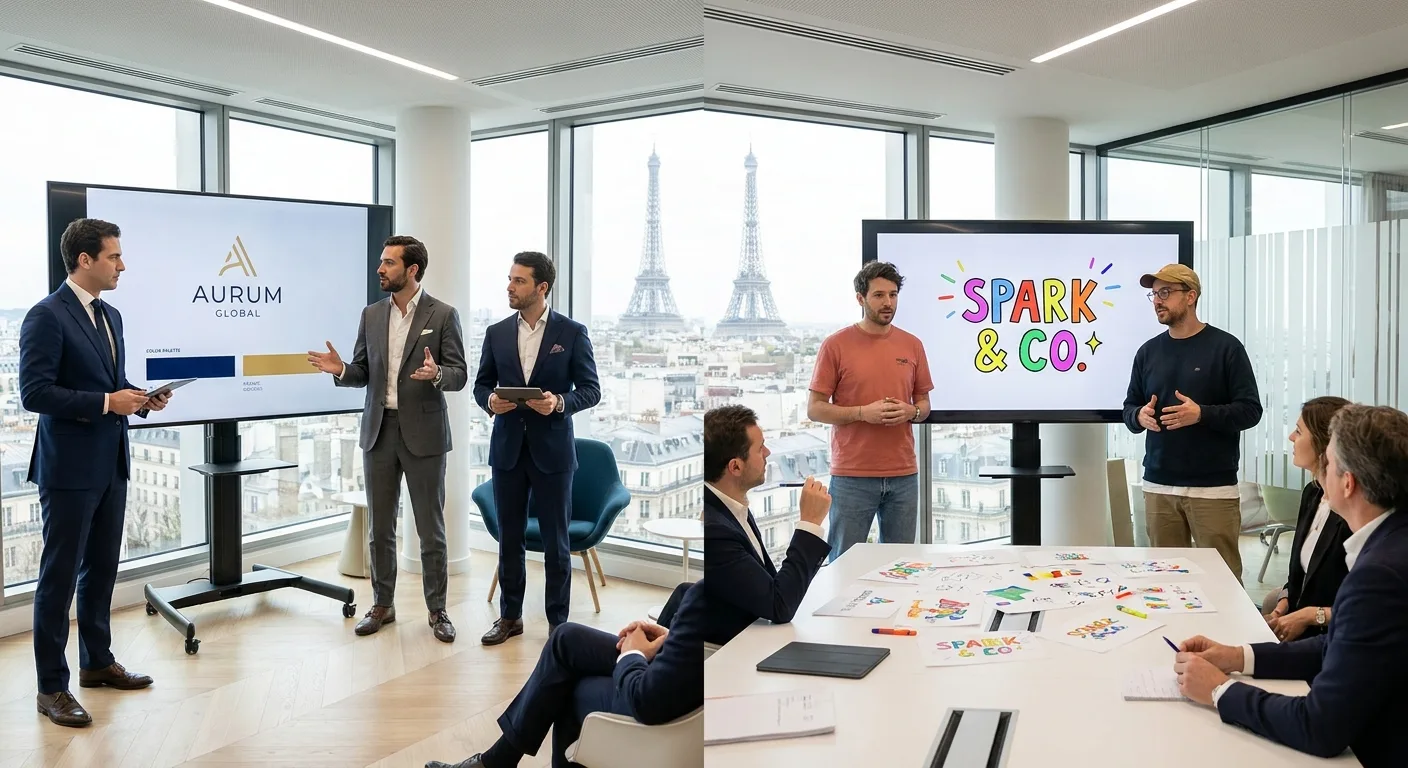
What are the differences between an agency that works with major brands and one that works with startups?
The main difference lies in the budget, timelines, and level of governance: major brands require structure and processes, while startups prioritize speed and frugality. A brand experience agency therefore adapts its approach, not its creativity.
For a major brand like Warner Bros. or Cointreau, a project often involves several departments (marketing, legal, procurement) and a 4- to 6-month approval process. In Paris, Frénésie incorporates these decision-making processes into its schedules, with formal milestones and documented deliverables at each stage.
For a startup, the logic is reversed. There is often only one point of contact (the founder or head of marketing), decisions are made within a few days, and the budget requires tight creative trade-offs. For example, Frénésie has worked with brands like Back Market and Fruitz, where agility takes precedence over cumbersome processes.
Major Brands
Multi-service validation, 4- to 6-month timeline, budgets exceeding €150,000, and strict reporting requirements.
Startups
Quick decision-making, 4- to 8-week cycle, budgets ranging from €20,000 to €80,000, with a focus on direct ROI and virality.
In both cases, location matters: Paris is home to the most sought-after activation sites, from the Marais to Galeries Lafayette. To learn more about budgets, our 2026 Paris Brand Activation Budget Guide breaks down each line item.
How much does a brand experience in Paris cost, depending on the profile?
A brand experience in Paris costs between €20,000 for a startup and more than €300,000 for a major brand, depending on the scale of the initiative. The difference is due to the duration, the size of the venue, the technology used, and the number of cities involved.
For startups, Frénésie often creates short, focused campaigns: a three-day pop-up at a Parisian venue, a targeted event, or a product launch on a controlled budget. The goal is to generate as much content and as many leads as possible with a budget ranging from €20,000 to €80,000.
For a major brand, the budget increases with the duration (several weeks), custom set design, technical service providers, and a presence at multiple locations. A nationwide campaign or a multi-city tour frequently exceeds €300,000.
| Criterion | Startup | Major brand |
|---|---|---|
| Sample Budget | €20,000 – €80,000 | €150,000 – €300,000+ |
| Duration of the program | 3 to 10 days | 2 weeks to several months |
| Production Timeframe | 4 to 8 weeks | 4 to 6 months |
| Contacts | 1 to 2 decision-makers | 3 or more services |
| Top Priority | Brand Awareness, Virality, Leads | Image, National Cohesion |
These ranges reflect Frénésie’s experience with projects in Paris. According to Bpifrance (2024), the average marketing budget for a startup in the growth phase accounts for 12 to 15% of its revenue, which places significant constraints on resource allocation decisions.
What are the timelines and governance structures based on the brand's size?
A large brand requires long lead times (4 to 6 months) and formal governance, whereas a startup operates in short cycles of 4 to 8 weeks with centralized decision-making. This factor completely changes the way the project is organized.
When working with major clients, Frénésie has to navigate approval committees, strict brand guidelines, and procurement departments that negotiate every line item. In Paris, a project for Ponant or Crédit Agricole involves several documented rounds of back-and-forth communication, requests for proposals, and framework agreements. This rigor protects the brand but extends the timeline.
At startups, the pace is picking up. A founder approves a concept during a meeting, and the agency gets to work right away. Frénésie has run campaigns for agile brands like LinkedIn and Braze, where responsiveness makes all the difference. The risk: decisions being revised along the way due to the lack of a solid initial framework.
Key takeaways
- Major brands: 4- to 6-month lead times, multi-service governance, framework agreements.
- Startups: 4 to 8 weeks, centralized decision-making, high responsiveness.
- In Paris, access to the activation venues requires a reservation made 2 to 3 months in advance in both cases.
Differences in governance also influence the choice between an external agency and an in-house team. Our analysis comparing a brand experience agency in Paris with in-house capabilities details the trade-offs based on the organization’s maturity.
What KPIs should major brands and startups focus on?
Major brands measure brand image, media coverage, and brand consistency, while startups primarily track leads, conversions, and social virality. Success metrics therefore differ significantly depending on the company’s profile.
For a major brand, Frénésie develops reports focused on brand awareness: number of visitors, press coverage, share of voice, and sentiment. In Paris, a campaign for Timberland or Swatch aims to establish a lasting brand image, using both qualitative and quantitative metrics.
For a startup, KPIs are more straightforward: cost per lead, email capture rate, volume of content generated by visitors, and organic reach on TikTok or Instagram. Frénésie has worked with TikTok and Fruitz on initiatives designed to maximize social sharing.
72 %
French marketing departments are increasing their experiential marketing budgets (Union des marques, 2024).
These expectations are reflected right from the brief. A major brand will request a measurement plan approved by its research department; a startup will want a simple, real-time, actionable dashboard. According to the Ministry of the Economy, the French startup ecosystem included more than 30,000 companies in 2024—a pool of clients with specific requirements. To see real-world examples, browse Frénésie’s portfolio.
How to Choose a Brand Experience Agency in Paris?
The right choice depends on how well your brand’s profile aligns with the agency’s experience on comparable projects, both in terms of budget and governance. An agency accustomed to working with large clients won’t have the same approach as one experienced with startups—and vice versa.
In Paris, Frénésie is unique in that it spans both worlds: campaigns for international brands like Adidas and Warner Bros, and agile activations for scale-ups. This dual approach allows the company to tailor its processes without sacrificing creativity.
Three criteria guide the selection process. First, the portfolio: ask for references for projects with budgets and timelines comparable to yours. Next, local production capacity: in Paris, access to venues and technical service providers can save weeks. Finally, cost transparency, which is essential for both a startup on a tight budget and a large corporate client.
To compare market players, check out our overview of the best brand experience agencies in Paris. A study bythe Union des marques confirms that cultural alignment between a brand and its agency remains the number one factor in the success of a brand activation.
The final criterion is a human one: a relationship built on trust. An agency that understands your constraints—whether budgetary or organizational—will develop a more effective strategy. This is what both a marketing director at a large corporation and a startup founder in Paris are looking for.
What our customers say
Frénésie has a rating of 5.0/5 based on one verified review, reflecting a consistently high standard regardless of the customer's profile.
“I had the pleasure of working with them on two major projects: the 10th anniversary of the company where I serve as event manager. Everything was handled with great skill and professionalism; they were able to adapt to our last-minute requests and perfectly met our expectations. Kudos to the entire team.”
— Floriane Carret, Event Manager★★★★★ 5/5
Frequently Asked Questions
Can a startup afford to hire a brand experience agency in Paris?
Yes. In Paris, Frénésie designs marketing campaigns for startups starting at €20,000, in the form of short-term pop-ups or targeted promotional events. The goal is to maximize brand awareness and generate leads while staying within a controlled budget.
What is the average turnaround time for a major brand's activation?
For a major brand, the typical turnaround time ranges from 4 to 6 months, due to cross-departmental approvals and strict guidelines. Frénésie incorporates these decision-making processes from the very start of the project in Paris.
Are KPIs really different between startups and large companies?
Yes. Startups track leads, conversions, and social virality. Major brands measure brand image, press coverage, and share of voice. Frénésie tailors its reporting to each client’s specific needs.
Do you need to reserve a venue in advance for a pop-up in Paris?
Yes, plan to book 2 to 3 months in advance for the most sought-after event venues in Paris. Frénésie has a network of venues and service providers that can speed up this process.
Can a single agency serve both major brands and startups?
Yes, provided you can navigate two different work cultures. Frénésie has led projects for both Adidas and Back Market, fine-tuning processes without compromising creativity.
How do you estimate the budget for a brand experience?
The budget depends on the duration, the area, the technology, and the number of cities. In Paris, Frénésie provides a detailed itemized quote after an initial free consultation.
Written by
Benoit Malphettes
CEO and co-founder of the brand experience agency Frénésie. Based in Paris, he oversees brand activations for major international clients as well as growing startups, with expertise across the entire process, from concept to production.
Summarize this article using AI
Need to design a brand activation in Paris?
Whether you’re a major brand or a startup, Frénésie tailors its approach to your budget and timeline. Rated 5.0/5 with over ten years of experience in Paris.
Schedule a free appointment